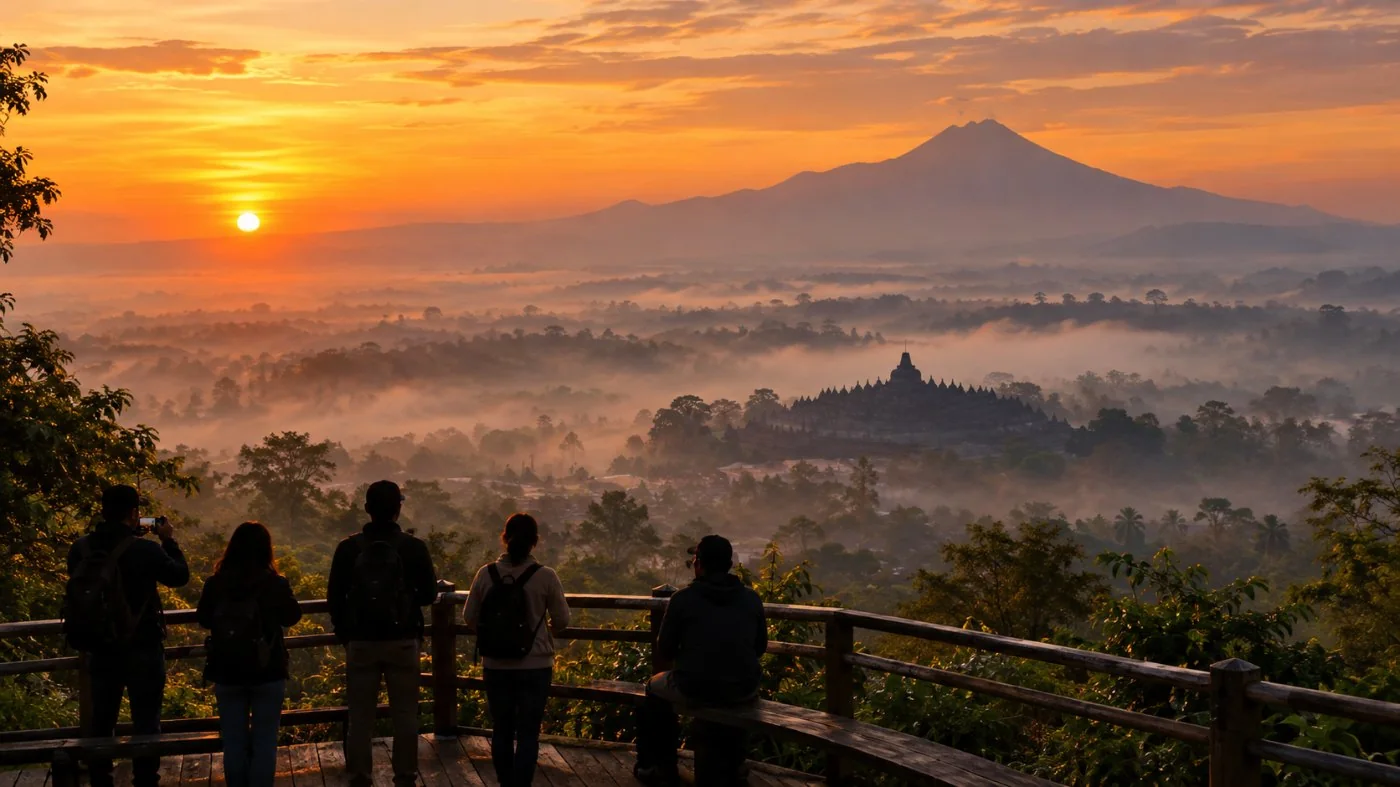
Booking choice: The hill-or-temple sunrise tour, 5 to 8 hours. Book this Tour details
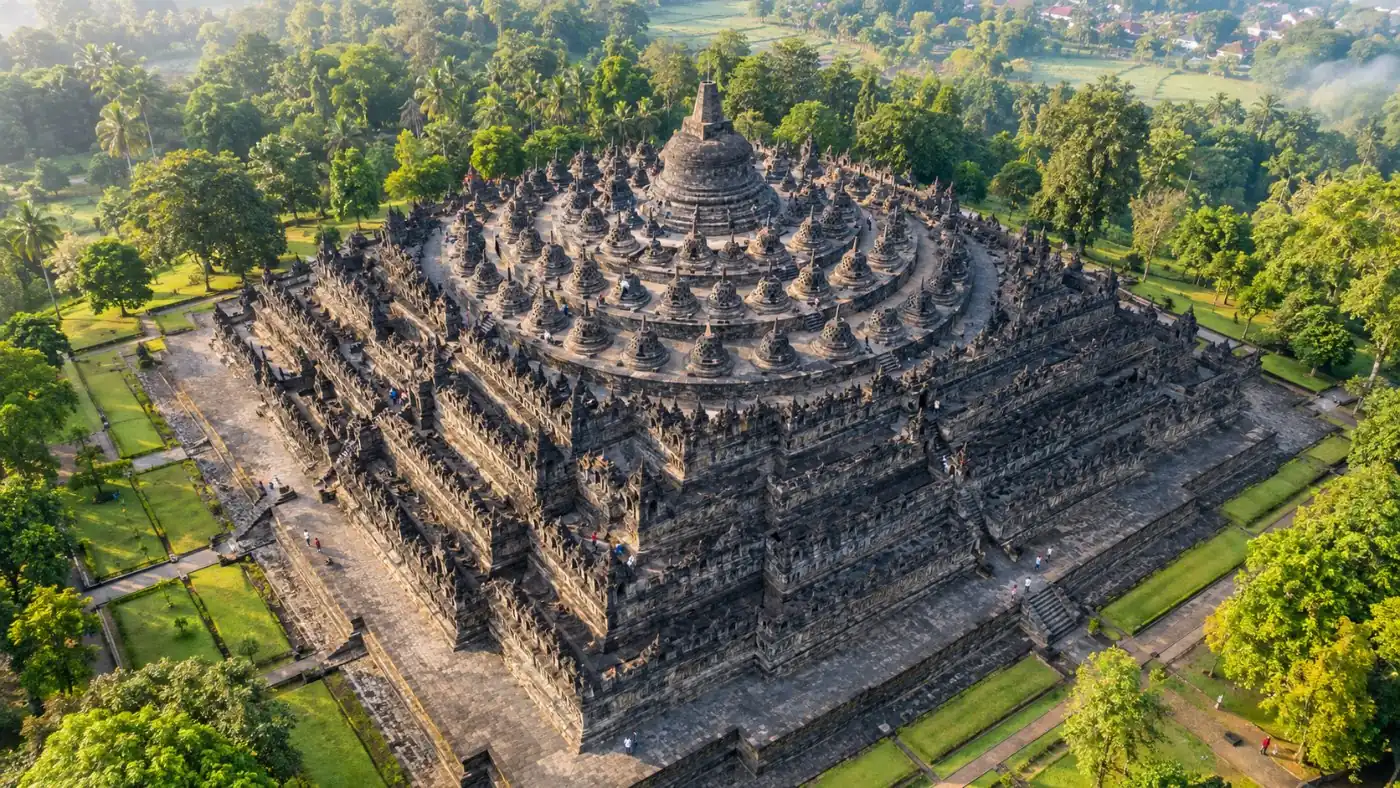
Borobudur is a Buddhist monument in Central Java, about 40 km north-west of Yogyakarta. It was built by the Sailendra dynasty in the late 8th and early 9th centuries, roughly between 780 and the 830s, and UNESCO listed it with the nearby Mendut and Pawon temples as the Borobudur Temple Compounds in 1991.
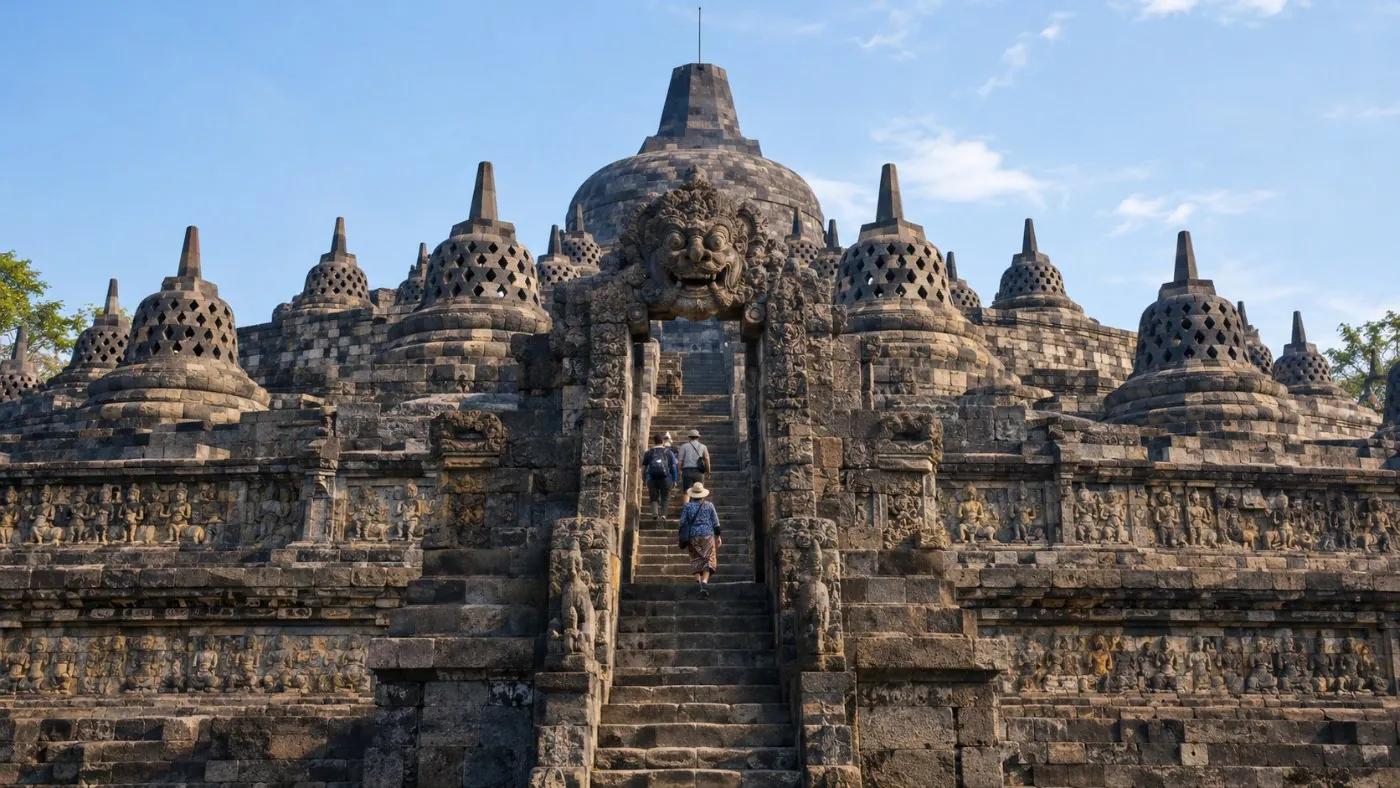
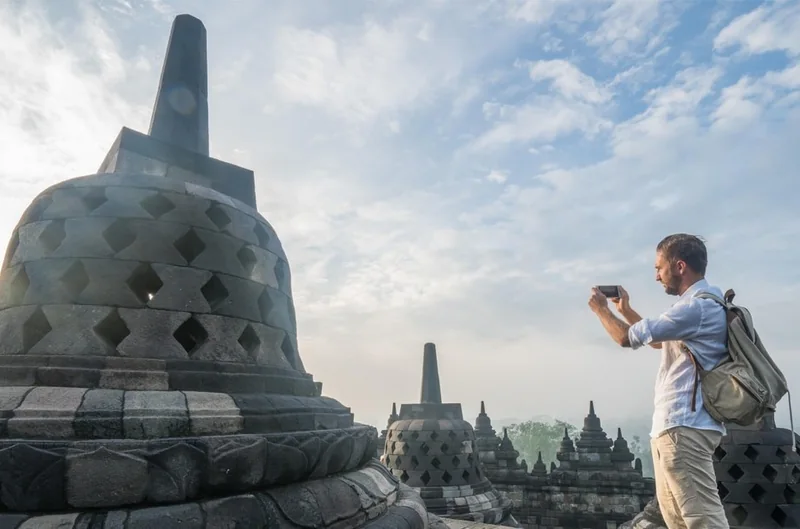
It is not a temple you enter. It is a stepped stone mountain with no inner rooms, built to be walked around and up, from the world of desire at the base to the formless world at the top. Its guides know every panel, and a good one makes the climb twice as interesting.
The quick answer
Borobudur is the largest Buddhist temple in the world, per Guinness World Records, but Angkor Wat is the larger religious monument overall. It is not one of the New 7 Wonders. It has nine stacked platforms, 2,672 relief panels, 504 Buddha statues and 72 latticed stupas around a central dome. Why it was abandoned is unknown; volcanic eruptions and the shift of power to East Java are the leading theories.
Is Borobudur the largest Buddhist temple in the world?
Yes. Guinness World Records lists it as the largest Buddhist temple. Angkor Wat in Cambodia is larger, but Guinness classes it as the largest religious structure, and it was built as a Hindu temple.
The distinction matters because the claim gets stretched. Borobudur is not bigger than Angkor Wat; Angkor's complex covers far more ground. Borobudur holds the record for a Buddhist temple, recorded by Guinness in 2012. It is also often called the largest and most complete set of Buddhist reliefs anywhere.
Is Borobudur one of the Seven Wonders of the World?
No. It is not one of the New 7 Wonders chosen in 2007 and was not among the finalists. Indonesia's entry in that campaign was Komodo, in the separate nature list.
The New 7 Wonders are Chichén Itzá, Petra, the Great Wall, the Colosseum, the Taj Mahal, Machu Picchu and Christ the Redeemer. Angkor Wat made the shortlist; Borobudur did not. Some pages call it a wonder of the world informally. That is praise, not a title.
See it for yourself at first light: the hill or the temple top, chosen at booking, then a guided climb.
Book thisHow big is Borobudur, in numbers?
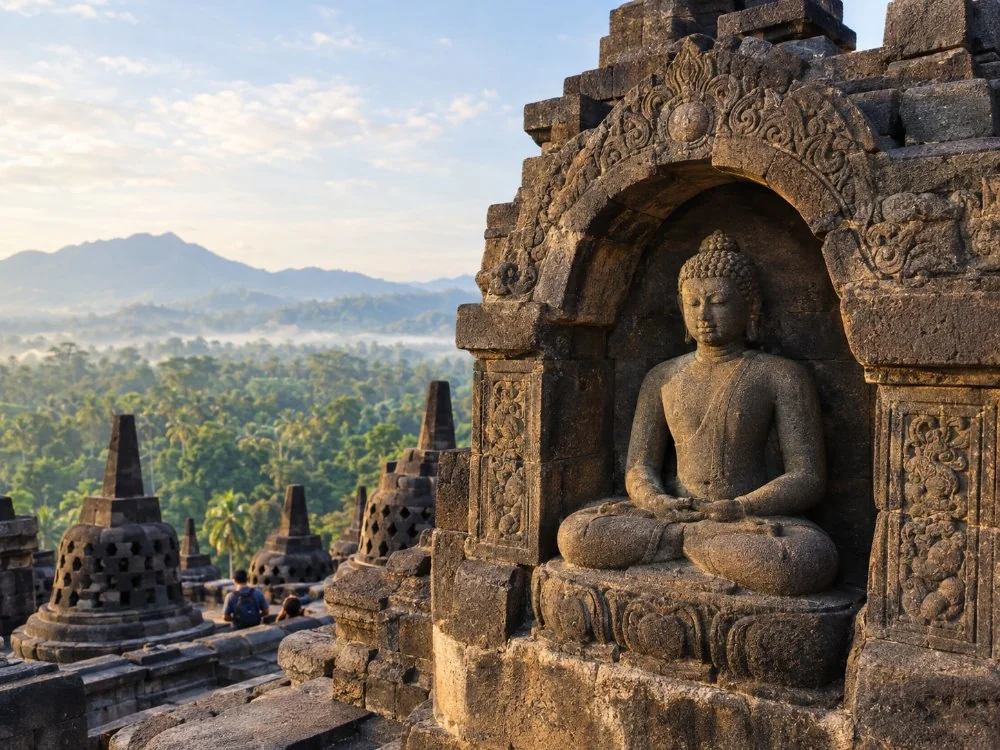
About 123 m on each side and about 35 m high today, with nine stacked platforms, 2,672 relief panels, 504 Buddha statues and 72 latticed stupas.
| Feature | Number | Note |
|---|---|---|
| Base | About 123 m per side | Square plan |
| Height | About 35 m | Taller before the top spire was lost |
| Platforms | 9: 6 square, 3 circular | UNESCO counts 5 terraces on a base |
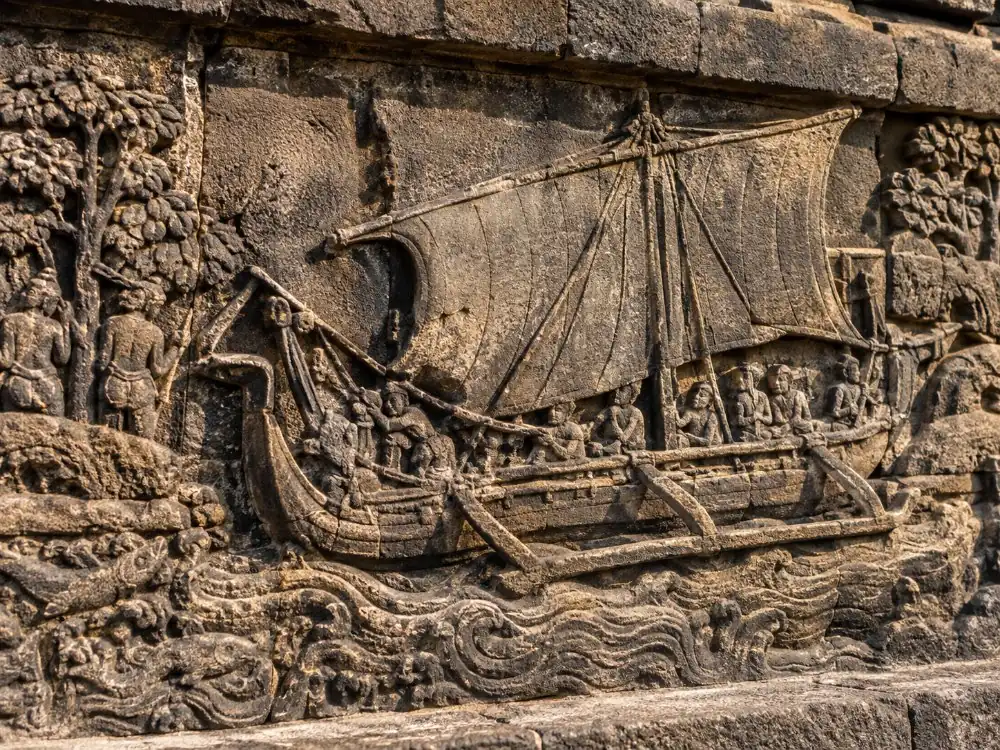
| Relief panels | 2,672 | 1,460 narrative, 1,212 decorative |
| Buddha statues | 504 originally | 432 in niches, 72 inside stupas; many headless or missing |
| Latticed stupas | 72 | 32, 24 and 16 on the three circles, round one main stupa |
| Hidden reliefs | 160 | On the buried base; one corner is uncovered |
The levels follow Buddhist cosmology: Kamadhatu, the world of desire, at the base; Rupadhatu, the world of forms, in the square galleries; Arupadhatu, the formless world, on the circular terraces. Pilgrims walk clockwise round each level on the way up. The number of steps is a different story: there is no official count, and the figures online disagree.
Who built Borobudur, and why on a hill?
The Sailendra dynasty of the Mataram kingdom built it, over several decades from about 780. The architect's name, Gunadharma, comes from local legend, not records.
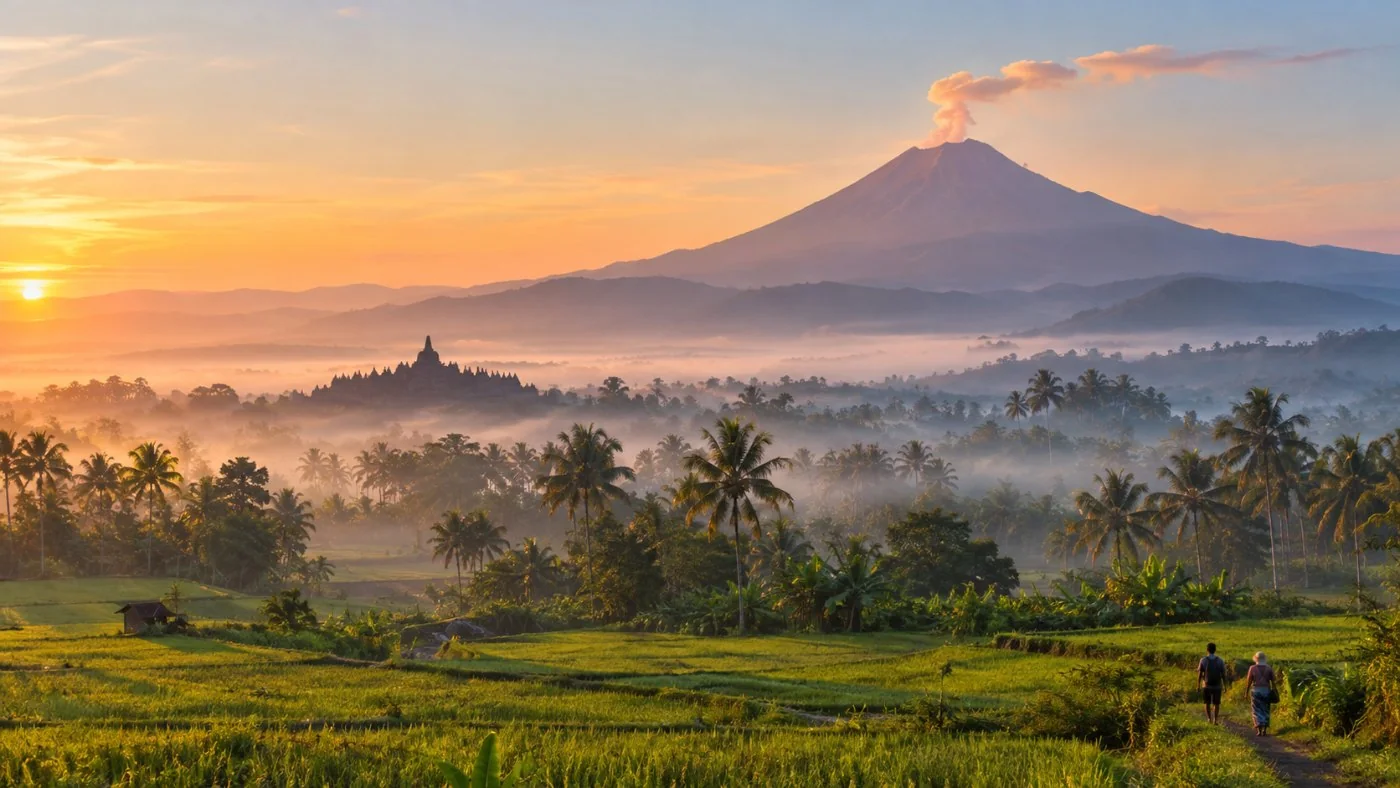
The temple was raised over a natural hill in the Kedu plain, ringed by volcanoes and rivers, which saved the builders a solid core of stone. Inscriptions linked to the temple suggest an old name along the lines of "mountain of accumulated virtue", but the origin of the word Borobudur is uncertain, with several competing theories.
An older idea that it once stood on the shore of a lake, like a lotus on water, was tested by geologists in the 1980s and rejected.
Why was Borobudur abandoned?
Nobody knows for sure. The leading theories are volcanic eruptions, the move of the royal court to East Java in the 10th century, and the gradual spread of Islam on Java from the 15th century.
UNESCO says the temple was in use until sometime between the 10th and 15th centuries. Ash and jungle then covered much of it. The popular line that it was "completely forgotten" until a European found it is wrong: it appears in a 14th-century Javanese text, the Nagarakretagama, and in later Javanese chronicles, and local people knew where it was.
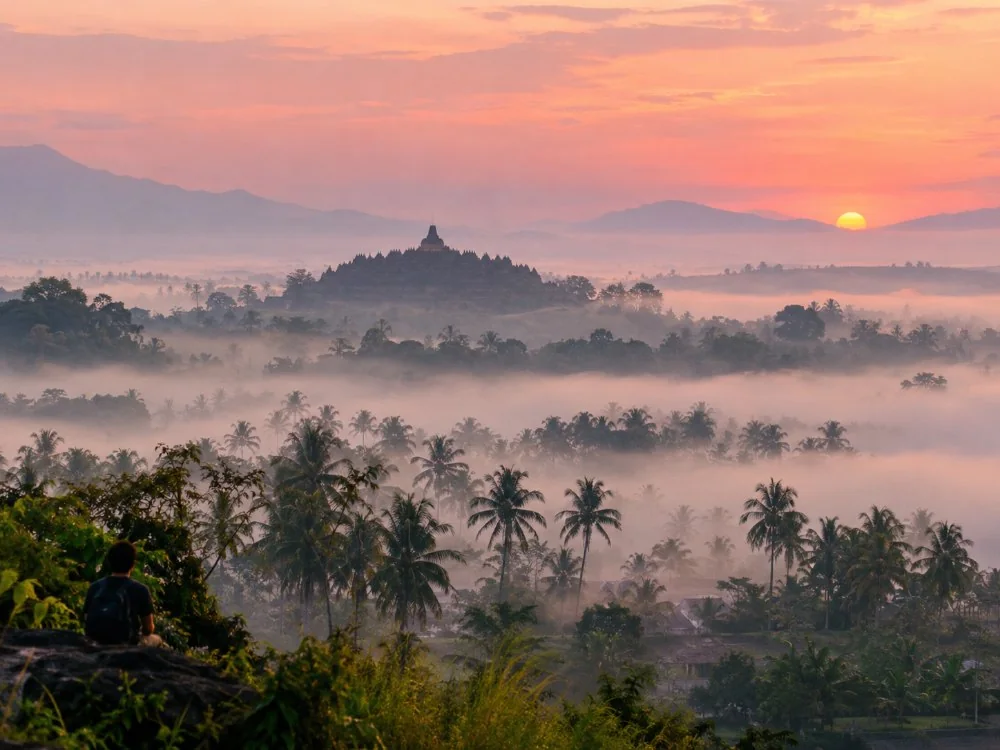
Who rediscovered Borobudur in 1814?
Thomas Stamford Raffles, the British lieutenant-governor of Java, heard about it and sent the Dutch engineer H.C. Cornelius, whose men cleared it over about two months.
About 200 men cut back the vegetation and dug out the ash. Raffles publicised the find in his History of Java in 1817, and the uncovering was completed in 1835. Raffles did not discover it in the sense of finding something unknown; he made it famous outside Java.
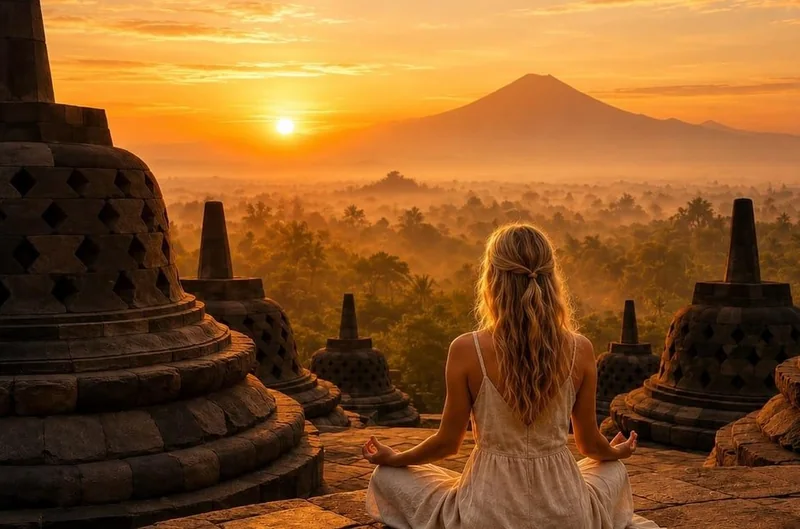
Stand where the Sailendra builders meant you to finish: the top terraces at dawn, before the public opening, with a licensed guide.
Book this Tour detailsHow was Borobudur restored, and what happened in 1985?
Two big restorations: Theodoor van Erp in 1907 to 1911, and the Indonesian and UNESCO project of the 1970s that took the monument apart and rebuilt it on a new foundation. In 1985 bombs damaged nine stupas, all since restored.
- 1907 to 1911: the Dutch engineer van Erp rebuilt the top terraces. His reconstructed spire was later taken down and is in the site museum.
- 1975 to 1982: more than a million stones were dismantled, cleaned, catalogued and put back on a new concrete foundation with drainage. The monument was reopened in February 1983.
- 21 January 1985: nine bombs damaged nine stupas. Islamist militants were behind it, and a preacher was later sentenced to life in prison.
- 2006 and 2010: the temple came through the 2006 earthquake intact. Ash from Merapi's eruption in November 2010 closed it for days and took months to clean.
What is the Unfinished Buddha, and what is in the main stupa?
The main stupa is empty today. A rough, unfinished Buddha statue was found buried inside it during van Erp's restoration; why it was there is still debated.
Locals call the statue Mbah Bhelet. Some scholars think it was a flawed carving set aside, others that it was left unfinished on purpose, and others that it was the hidden central image. On 3 May 2026 it was moved from the Karmawibhangga Museum to Kenari Field within the temple complex, for easier access and veneration, as RRI reported.
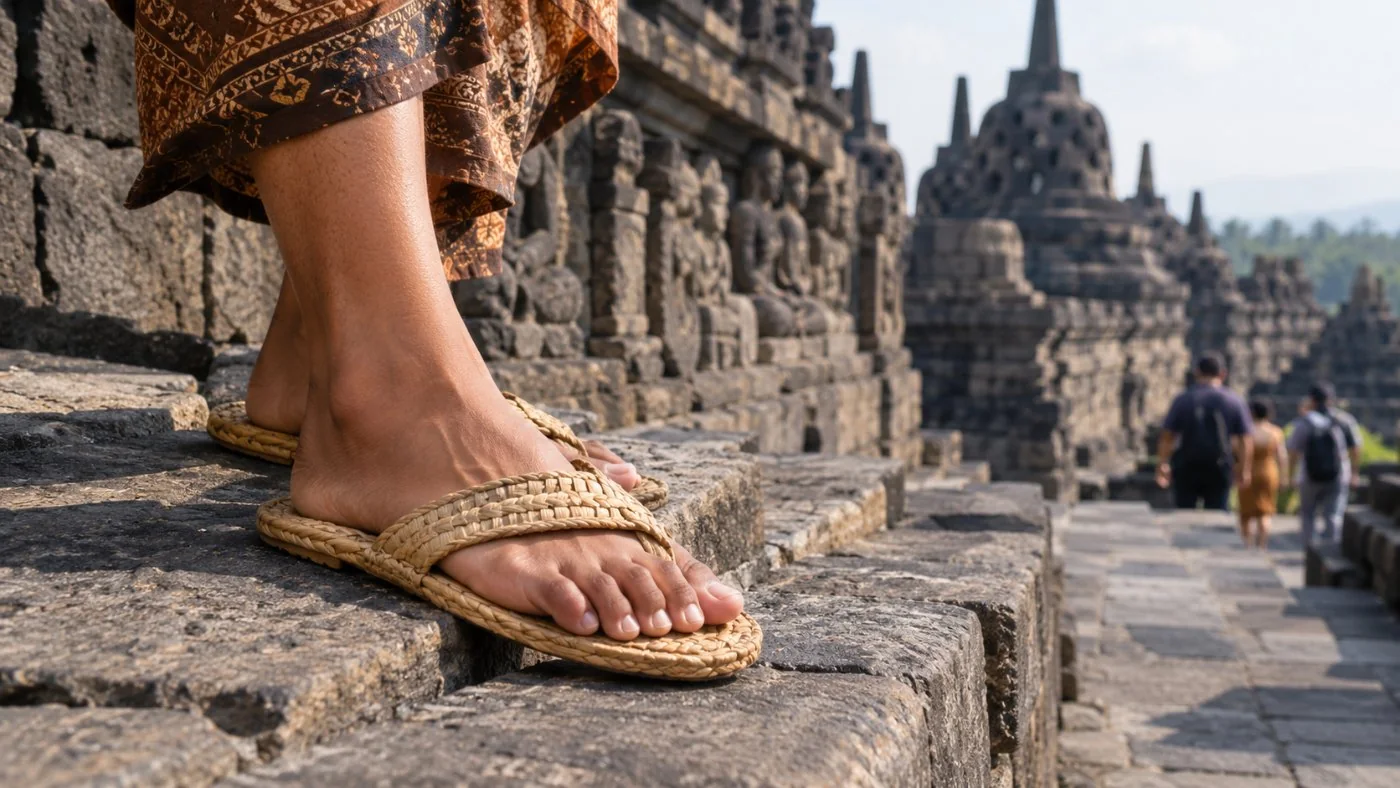
Say the name like an Indonesian and you will be close: bo-ro-BU-dur, with the stress on the second-to-last syllable. For what to see on the stones today, read the climbing rules before you go up.
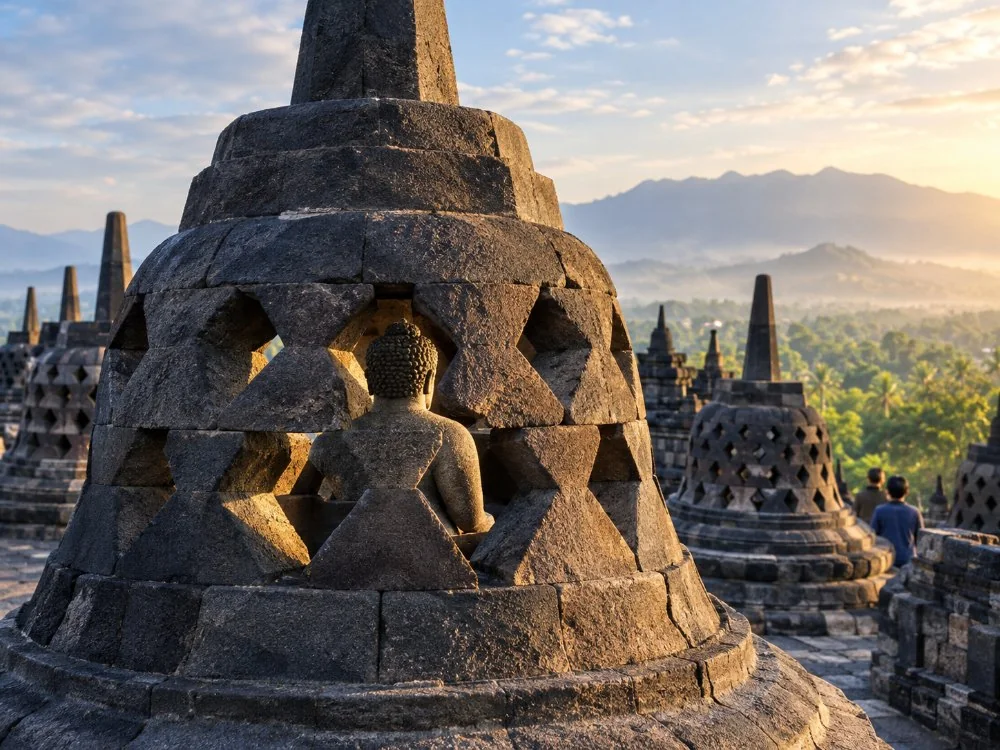
Hear these stories on the stones: a small group, a local guide at Borobudur and your choice of sunrise spot.
Book thisFrequently asked questions
How old is Borobudur?
About 1,200 years. It was built roughly between 780 and the 830s.
Is Borobudur older than Angkor Wat?
Yes, by about three centuries. Angkor Wat was built in the first half of the 12th century.
Is Borobudur still used for worship?
Yes. Buddhists gather there for Vesak each year, with a procession from Mendut, and the site is treated as a place of worship.
How do you pronounce Borobudur?
bo-ro-BU-dur, with the stress on the third syllable, as is usual in Indonesian.
Ready to book
Choose your sunrise
Free cancellation up to 24 hours before on every option. Check what each option includes before you pay.
Borobudur Sunrise: Hill or Temple, Entry Included
- Sunrise on Setumbu Hill, or inside the temple with that option
- Temple entry and climb-up access
- Local guide at Borobudur
VIP Sunrise Inside Borobudur with Breakfast
- Early access before public opening
- Licensed English-speaking guide
- Light breakfast with coffee or tea
Borobudur Sunrise, Climb-Up Assured & Prambanan
- Setumbu Hill entry on the hill options
- Borobudur climb-up access on every option
- Local guide